HubSpot2026
Four portals, one login
HubSpot’s customer portal scored 57% on satisfaction and had almost no design behind it. I redesigned it, got four teams to build one portal instead of four, and brought back a feature that had been shut down.

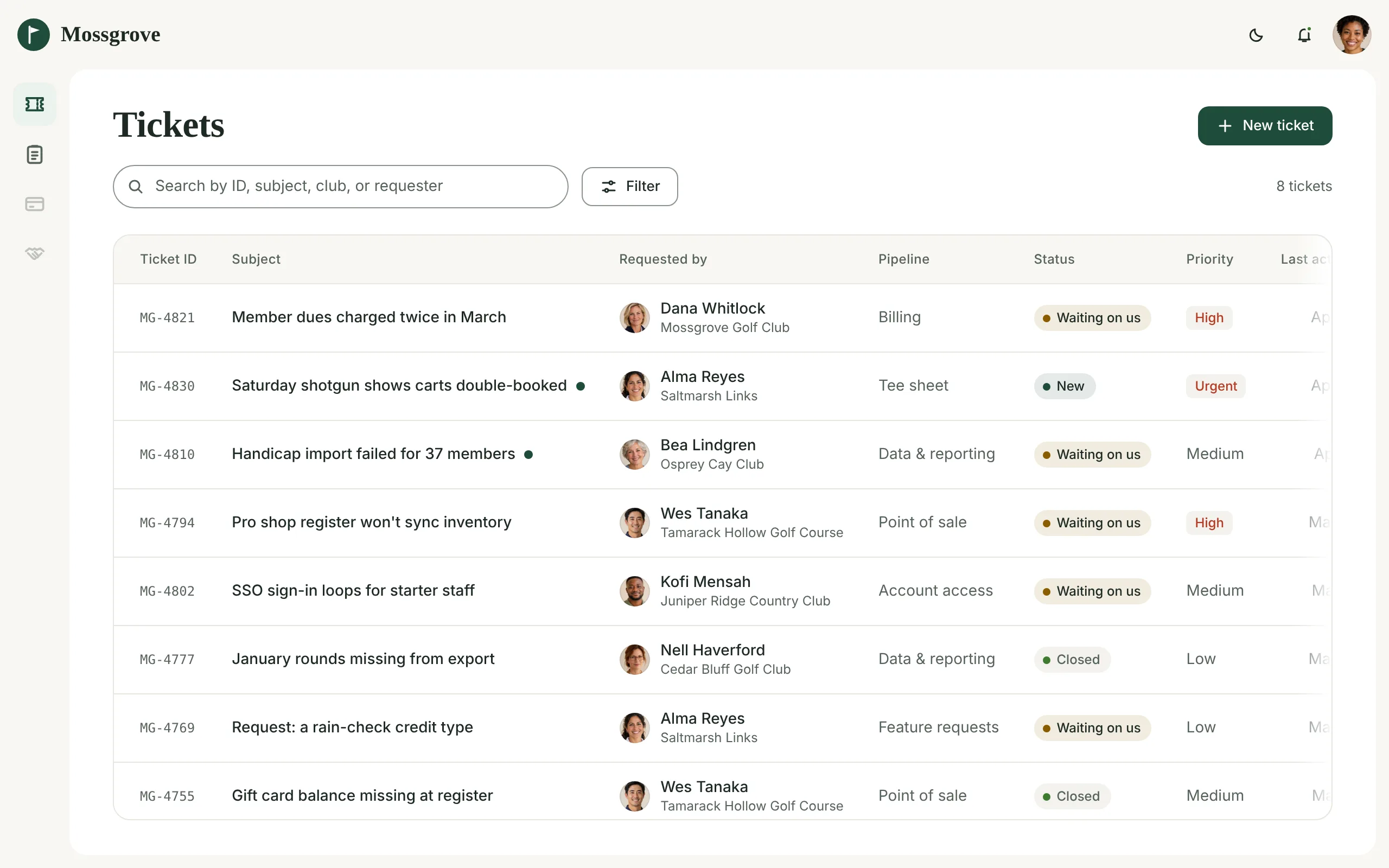
The portal isn’t for HubSpot’s customers. It’s for their customers: the people who file support tickets, pay invoices and get set up as new clients.
The problem
- 01
A portal businesses didn’t want to share
It was hard to brand, showed only part of each conversation, and scored 57% on satisfaction. Customers were leaving for other tools. I joined in October 2025, and the redesign shipped three months later.
- 02
Then it worked, and every team wanted its own
Billing, sales and onboarding each planned a separate portal: four logins for the same customer. Another team had tried to merge them for a year. In April 2026 they asked me to lead it.
- 03
And one feature had already failed
Onboarding plans went to beta without a designer. Customers called them confusing and unfinished, and the beta was shut down.
My role
Designed
The platform every portal runs on
- Navigation
- Settings
- Branding
- Access sharing
- Languages
- Analytics
- Information architecture
The support portal
- End-to-end redesign
Onboarding plans
- AI plan generation
- AI command bar
- Plan structure
- Bulk edit
- Task drawer
- Customer list
Led
- Set the one-portal, one-login vision that four teams adopted.
- Flagged platform gaps early and gave leadership clear launch options.
- I didn’t design the billing or sales screens. I designed the platform those teams built on.
Decisions that mattered
01Relaunch, don’t just migrate
Moving the support portal onto new infrastructure was planned as a backend job. I used it to relaunch the experience: branding, full conversation history, and sort, filter and search. Usage didn’t dip during the move. It rose 16% that quarter and 109% over the year, and proved one portal could work.
02One map for four teams
I gave every team the same structure: one portal, a space for each team, and pages inside each space. Support gets Tickets. Billing gets Invoices. A new feature becomes a page, not a new portal. That one rule let four teams ship one product.
03Opinionated over endlessly customizable
The top complaint was that branding took too long to set up. I cut the controls down to the few every portal needs. Less to configure, much faster setup.
04AI translates, a person approves
Businesses serve customers in many languages, but everything they wrote into their portal was English only. In one panel, the admin picks languages, and Breeze, HubSpot’s AI, suggests the ones visitors actually use. It translates everything, flags phrases that need a human eye, and leaves brand names alone. Nothing goes live until a person approves it.
Chapter 2: Onboarding plans
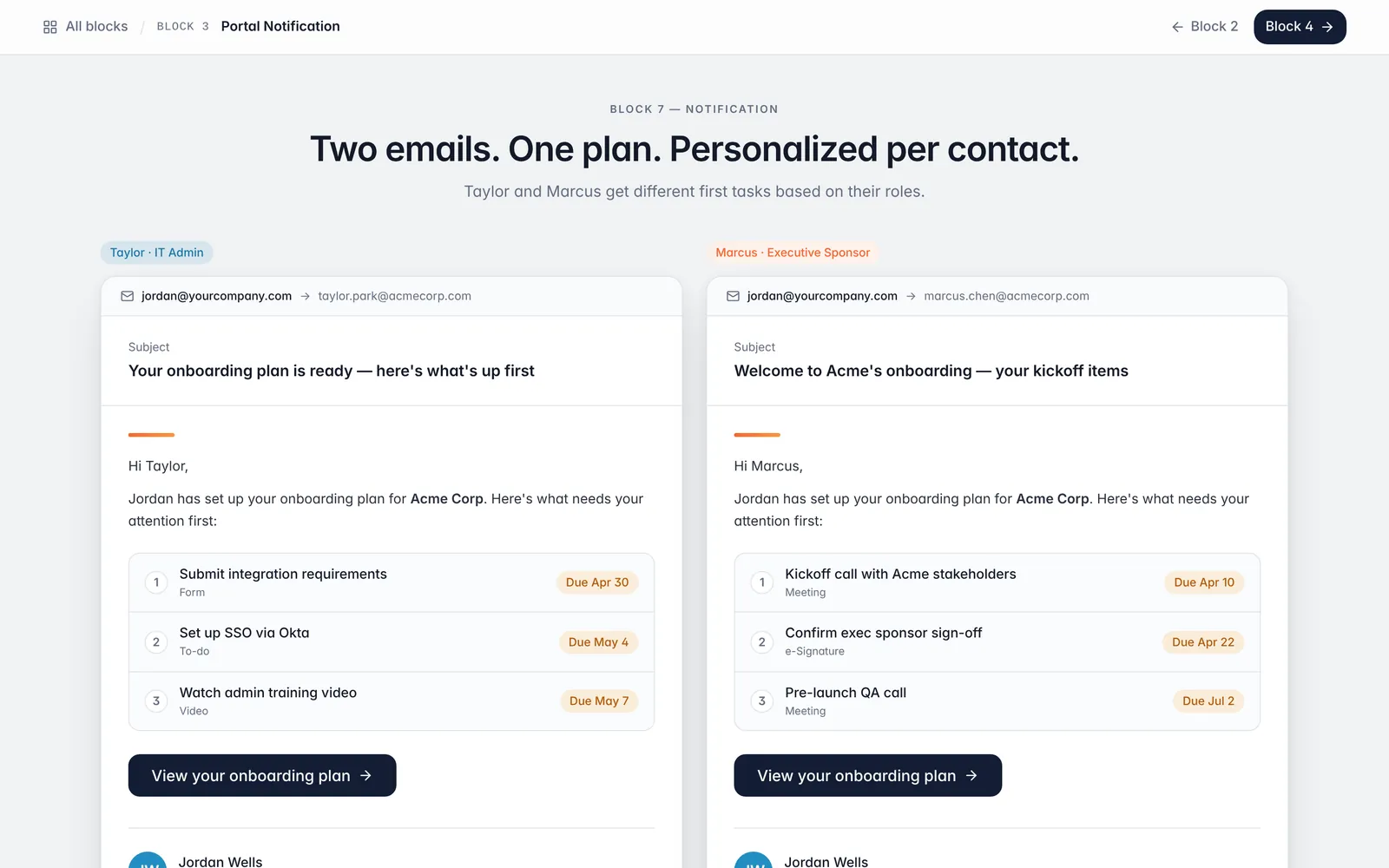
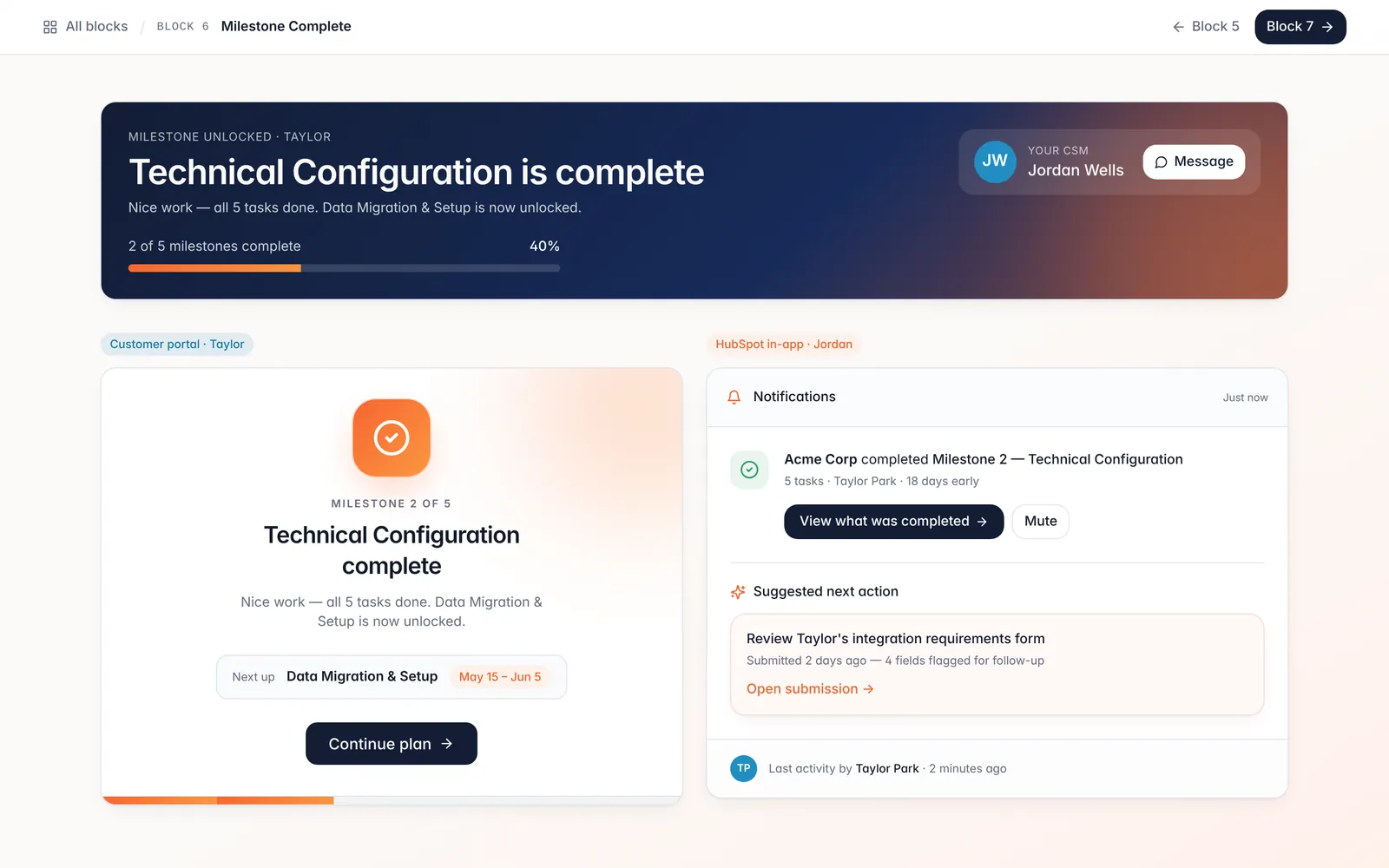
An onboarding plan walks a new customer from kickoff to go-live, with tasks for both sides. Customer success managers (CSMs) used to build every plan by hand. I redesigned it around Breeze: AI drafts the plan, the CSM adjusts it, and the customer works through it in the new portal. 1,500 portals signed up in the first month.
01Breeze drafts the whole plan
Building a plan used to be manual: a CSM added every task, one at a time, and a single plan could take hours. Now the CSM picks the client, and Breeze’s agents work out the right milestones, tasks, owners and dates behind the scenes. The CSM starts from a full draft instead of a blank page, then adjusts what needs it.
02Then Breeze makes the edits. Undo keeps them safe.
Adjusting the draft works the same way. A CSM types “push everything back a week.” Breeze shows exactly what will change before anything does, and Undo puts it all back. When a request is unclear, it asks instead of guessing. I limited it to 20 known edits, so it never improvises.
03A list, not cards, for customers
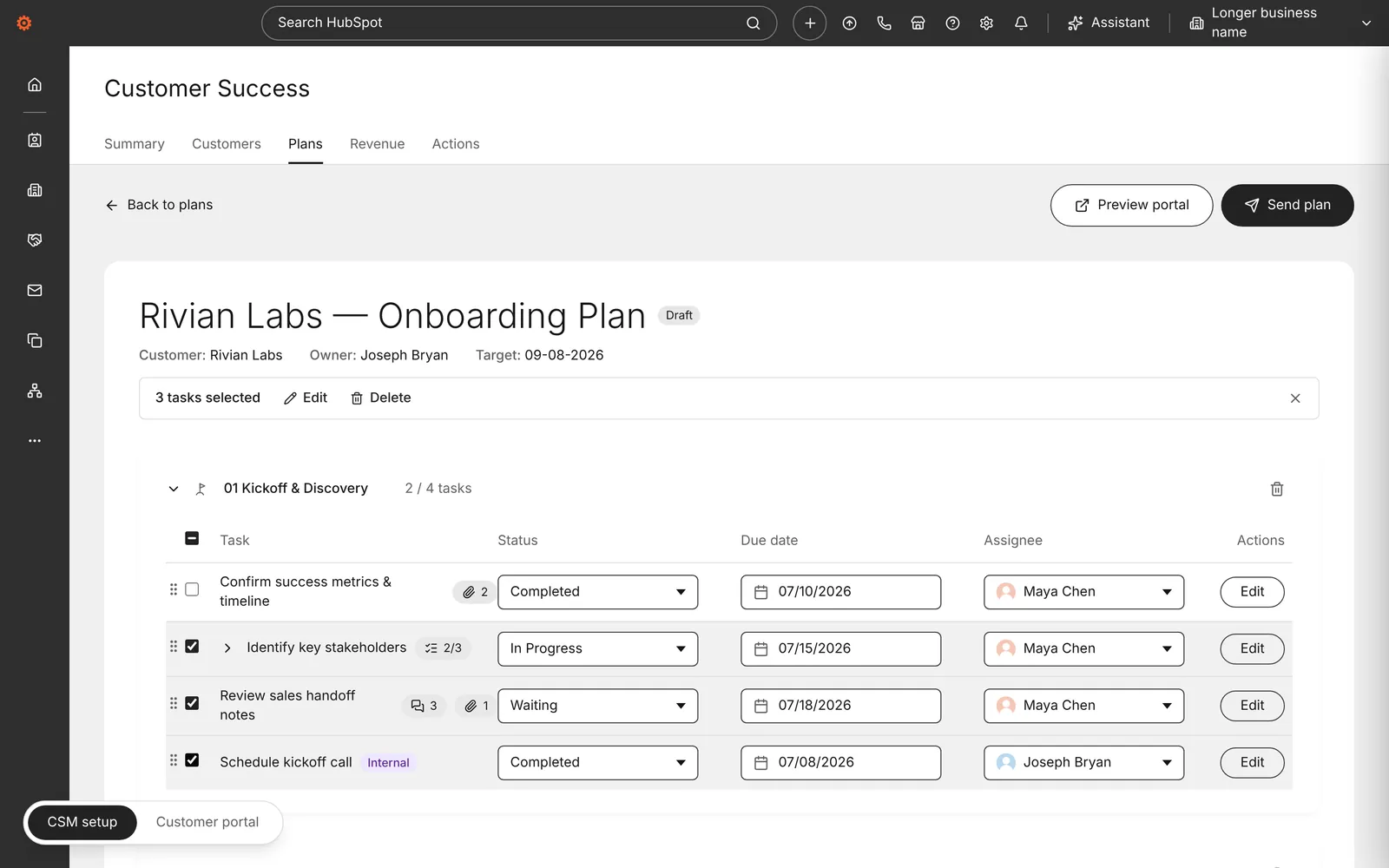
We tested cards first. The list won because it’s easier to scan: every row shows the owner, status, due date and next step. CSMs can preview exactly what their customer sees.
04Task type separate from status
Old tasks mixed up what to do with how far along it was. I split the two: the type says what to do, like fill in a form or upload a file, and the status says where it stands. The confusion stopped.
The concept flow that set the direction
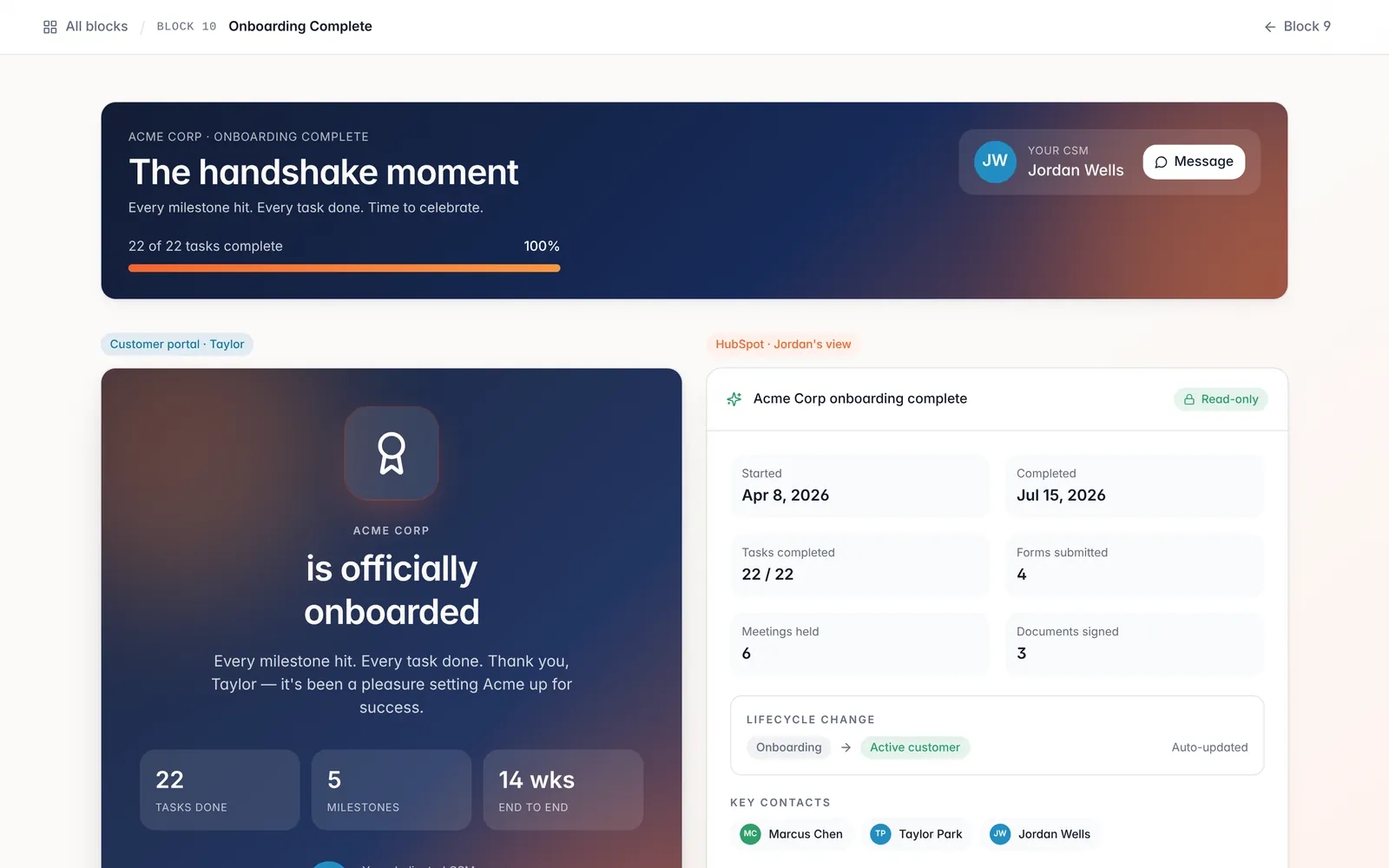
Results
-
CSAT went from 57% to 83% happy
Aug–Oct 2026
-
190K daily active visitors
up 140% quarter over quarter (Jul–Sep 2026).
-
A platform migration with no dip
Activation and usage held through the move, and usage rose 16% on the quarter and 109% on the year.
-
Customers had been waiting for it
Several said they’d held off promoting the portal to their own clients until these changes landed.
-
Onboarding plans came back
The redesign reopened the closed beta, and 1,500 portals signed up in its first month.
How we knew: concept testing with customers in Q4 2025, then Amplitude after launch.
“Joe set a one-portal, one-login vision that four teams adopted and designed the shared system underneath it himself. That is the kind of cross-team influence expected of a Staff designer.”
Click through the whole thing.
Tickets, the customer’s onboarding plan, and the HubSpot side where CSMs build plans with Breeze. Use the view switch in the bottom left to flip between the two.